Tuesday, January 4, 2022

Marathon Training - An Overview

Jennifer Heiner has served as the retail director of a running company in New Jersey since 2019. Active within the New York City running community, Jennifer Heiner has helped organize a number of training runs for the New York City Marathon, including the 20-mile Three Bridges Run, where she was also a pace group leader.

  Training for a 26.2-mile marathon requires organization, persistence, and discipline. The first training element is base mileage, which requires running three to five times per week and gradually increasing weekly mileage. Over the course of 10 to 20 weeks of training, runners should plan to build their mileage up to around 50 miles per week. Avoid increasing mileage by more than 10 percent per week. Every 7 to 10 days, runners should plan on a long run to help the body adjust to long distances. This distance should increase over time, then drop back down in order to let the body recover. These long runs should be taken at a slower pace in order to help the body adjust and learn to utilize fat for fuel. A peak run, such as the 20-mile Three Bridges Run, ensures the runner is prepared for marathon day. A marathon training schedule should also include rest days, which are essential for muscle recovery and injury prevention

There are so many different types of training you can incorporate into your daily running, and Fleet Feet has outlined a broad overview of such. 

"Ask a runner from the 1970s or 1980s what their base comprised of, and they’ll give you an acronym more often associated with hippies than runners: LSD. Long slow distance was all the rage during the first running boom. Run enough of those miles, the thinking went, and you’ll get so strong that speed won’t even matter.

The results back up that logic to a point. Between the two of them, Frank Shorter and Bill Rodgers claimed over a dozen major marathon victories. Their mileage was no less impressive: 120, 140, even 160 per week.

Running lots of easy miles is good, but it’s not the most efficient way to improve (especially since most of us don’t have the time or inclination to run 160 miles next week!). Over time, coaches and physiologists came to realize that incorporating greater variety into a base phase led to better results. The body, after all, responds to training that challenges it. Do the same thing every day, and that challenge diminishes, as do the gains. For that reason, a proper base phase should incorporate the following runs:

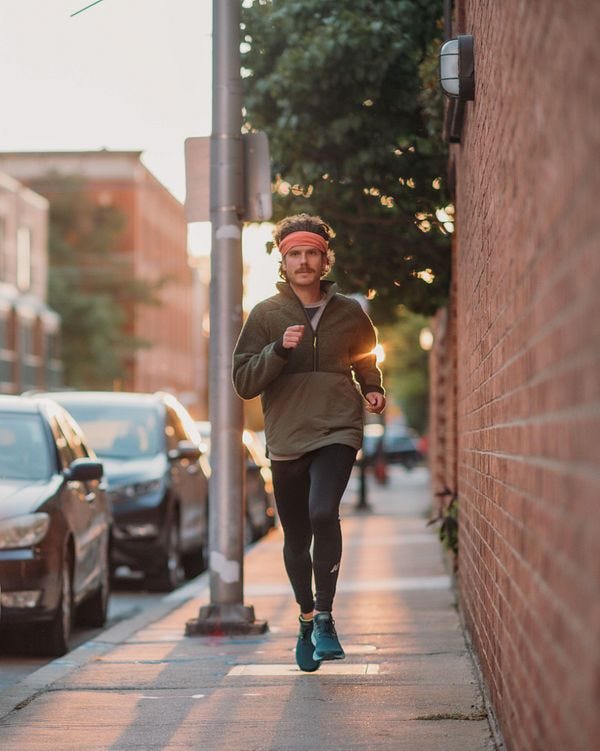
A man runs on a city sidewalk.


Long runs:

A weekly staple for many, a long run should introduce the biggest single dose of aerobic running in a given time frame. Long runs enhance general fitness and musculoskeletal strength while giving you a psychological boost from covering so much ground. Runs that get incrementally faster (known as progression runs) or contain surges and pickups further increase the training stimulus.

Easy/regular/aerobic runs:

During the base phase, regular runs are incredibly important. Since workouts are less intense and more spaced out, these runs serve as a great way to reinforce the benefits of a long run in a smaller, more manageable package.

Fartleks and tempos:

Tempo runs and fartlek sessions are generally aerobic in nature, but it’s a higher-level aerobic workout that receives support from an anaerobic energy processes. You’ll feel this shift as labored breathing and tired legs. Whether it’s a steady five-mile tempo at half-marathon pace or a 30-minute session alternating two minutes hard with one minute easy, the goal should be to stay moderately uncomfortable throughout. These workouts also serve as a good bridge toward the shorter, more intense interval sessions that define the next phase of training in the spring.

Sneaking in Speed

A man and a woman run on a track.

Another deviation from old-school training methodology is incorporating a small amount of speed into training year-round. Running fast for short periods of time makes you more efficient at slower speeds, recruits different muscle groups, develops maximal power, and keeps you from feeling stale. Coaches usually incorporate this in one of three ways:

Strides:

Strides can be performed on a track or a flat neighborhood street. They usually last 15 to 25 seconds. Build up to about mile race pace (or a quick but sustainable effort) over the first half of the stride and then hold that pace for the duration. Since these are anaerobic, take sufficient rest to ensure your form doesn’t start to break down. A session of 4 to 8 strides at the end of an easy run should feel invigorating, not difficult.

Hills:

Hills sprints are a great way to work on maintaining posture and knee drive. Although the intensity is high, your body takes less of a pounding because of the incline and slower speeds. Longer hills of 200 to 800 meters can be used to develop aerobic conditioning; hills as short as 8 seconds, when run all-out, can simulate the types of gains found by weight training and plyometrics (jumping exercises). As always, make sure you’re well-recovered before each interval.

Short intervals:

Though these will be found mostly later in the season, there’s nothing wrong with sneaking in a short track workout from time to time. The main difference between early-season and late-season speed sessions is the density. Early-season sessions should be shorter intervals with plenty of rest. A session of 8 x 200 meters @ mile pace with 1:30 recovery after each interval is an example of this type of session.

Making Your Base Count

Now that you understand the fundamentals let’s look at how we can tie all these disparate elements together. The first thing you want to look at is your weekly mileage. Overuse injuries occur when you bump total mileage too high, too quickly. When in doubt aim for no more than a 5- to 10-percent increase each week, with a lower mileage recovery week thrown in every 3 to 4 weeks.

The total volume also shouldn’t jump more than 15 to 25 percent in a given year. (If you averaged 40 miles per week last year, gradually progressing up to 50 miles per week this year might be a reasonable goal.) Once you’ve hit a new mileage plateau, you can slowly layer in more intensity to increase the quality of the training.

Speaking of quality, most runners only need one speed workout and one long run each week with easy mileage making up the other days. Rotating your workouts between tempos, hills, fartleks, and short speed will ensure training variety. It’ll also give you a great chance for some fast racing come the spring.

By Philip Latter. Latter is a former senior writer at Running Times and co-author of Running Flow and Faster Road Racing. His work has also appeared in Runner's World, runnersworld.com, and ESPN.com. He currently coaches athletes at The Running Syndicate, in addition to his day job coaching high school runners at Brevard High School (NC)."

Wednesday, December 22, 2021

Take your Running to a New Level

 Since joining a New Jersey running company as retail director in 2019, Jennifer Heiner has assisted with aspects of business development and overseen daily operations at several of the company’s stores. Jennifer Heiner-Pisano balances her professional responsibilities with membership in the New York Road Runners (NYRR) recreational running club.

Having coaching this guidance is incredibly important for new and returning runners alike. Whether starting from scratch or working your way back up to peak form, building a good “base” of running is key to staying healthy and preventing injury, and also doing your best. Fleet Feet, a fantastic chain of local running stores, recently published an article about this very topic.

Winter footing might not always be so hot, but the colder months offer a great opportunity to build an aerobic base. This phase of training — consisting almost entirely of easy to moderate runs with a little dash of hills and speed thrown in — is the greatest predictor of future success in races ranging from the mile to the ultramarathon. It may lack the glamor of speed work, but nothing makes you faster than your base (and what’s in it).”

Phil Later on Fleet Feet’s blog states that “[r]unning lots of easy miles is good, but it’s not the most efficient way to improve (especially since most of us don’t have the time or inclination to run 160 miles next week!). Over time, coaches and physiologists came to realize that incorporating greater variety into a base phase led to better results. The body, after all, responds to training that challenges it. Do the same thing every day, and that challenge diminishes, as do the gains. For that reason, a proper base phase should incorporate the following runs:

Long runs:

A weekly staple for many, a long run should introduce the biggest single dose of aerobic running in a given time frame. Long runs enhance general fitness and musculoskeletal strength while giving you a psychological boost from covering so much ground. Runs that get incrementally faster (known as progression runs) or contain surges and pickups further increase the training stimulus.

Easy/regular/aerobic runs:

During the base phase, regular runs are incredibly important. Since workouts are less intense and more spaced out, these runs serve as a great way to reinforce the benefits of a long run in a smaller, more manageable package.

Fartleks and tempos:

Tempo runs and fartlek sessions are generally aerobic in nature, but it’s a higher-level aerobic workout that receives support from an anaerobic energy processes. You’ll feel this shift as labored breathing and tired legs. Whether it’s a steady five-mile tempo at half-marathon pace or a 30-minute session alternating two minutes hard with one minute easy, the goal should be to stay moderately uncomfortable throughout. These workouts also serve as a good bridge toward the shorter, more intense interval sessions that define the next phase of training in the spring.”

Start incorporating more of these different types of runs to get your base ready to take you to the next level for your spring races!

Tuesday, October 5, 2021

Chaging a Dog's Behaviors and Retraining Their Fears

Jennifer Heiner  is a retail director at a New Jersey running company. Working closely with the company's founders, Jennifer Heiner  assists with the operation of three retail stores that furnish high-end performance apparel. This requires managing inventory control and hiring new associates during peak shopping periods. Additionally, she aids the company's business development initiatives, which include hosting multiple races each year. In this capacity, she offers coaching, race directing, and organizational assistance, from ensuring aid stations are stocked to securing winners' medals.

 Prior to her current position, Jennifer Heiner  helped to coordinate foster families at a dog rescue in New Jersey. As part of her responsibilities, she worked to expand the organization’s impact by recruiting more foster families and volunteers. She also assisted in providing more than 100 dogs a month with foster homes by addressing immediate issues that might arise during the fostering experience.  

Creating the best environment for your pets, foster or otherwise, is of utmost importance. This is true whether you get a dog as a puppy or later into adult hood, and the old adage "you can't teach an old dog new tricks" simply isn't true. Dogs can relearn or unlearn behaviors pretty easily. 


Some of the most rewarding experiences one can have, whether it is through fostering a dog or through adopting one from a shelter, is that you have the power to change that dog's life for the better. The things that once scared them can be changed and unlearned, and a dog can, in the right environment, learn to live confidently and happily. 


Friday, September 10, 2021

9/11 20th Anniversary and the Sports Weekend that Will Commemorate It

A six time marathon competitor, Jennifer Heiner volunteers with the New York Road Runners and enjoys all aspects of the running experience. As retail director with a local running company, Jennifer Heiner is involved with the company's founders in the expansion of what began as a race coaching and directing enterprise, and is now focused on high-end retail branding.

Ms. Heiner helps manage several stores at the operational level that feature in-house designed performance apparel for casual runners, as well as top-level competitors. Her responsibilities include inventory control and the seasonal hiring of sales associates able to effectively communicate the brand identity. She is also involved in the hosting of five Racefaster races each year, and oversees everything from the stocking of first aid stations to ordering medals.

Passionate about animals, Ms, Heiner has experience volunteering with organizations such as the International Fund for Animal Welfare and Long Island Bulldog Rescue. An avid traveler, Jennifer Heiner enjoys trying out new cuisines and recreating dishes she likes in the kitchen.

Jennifer is also an avid sports fan, and this weekend is going to be a tough one.  Its the 20th Anniversary of 9/11 and the New York Yankees are playing at the New York Mets on National TV, with tons of remembrances planned. 

Similarly, the New York Giants have their season opener at home against the Denver Broncos on 9/12, the day after the 20th anniversary. The Giants played the Broncos on Monday, September 10, 2001, the night before the attacks. 

"

1. Both teams will wear first responder caps

MLB has been a bit ham-fisted over the years when it comes to commemorating Sept. 11. Two years ago Mets slugger Pete Alonso said the league rejected his proposal to wear specially designed caps, so he and his teammates instead wore custom cleats and didn't bother to seek MLB's permission. There will be no such issue this year. The Yankees and Mets will both wear first responder caps during batting practice and during Saturday's game itself.

"Caps from the FDNY, NYPD, Port Authority Police Department, Department of Sanitation and Department of Correction will all be represented to commemorate their bravery and sacrifice," the Mets said in a statement. 

dom-smith.png
Getty Images

The Mets are also set to wear special home uniforms with "New York" on the front instead of their team name.

2. Bobby V will throw out the first pitch  

Prior to Saturday's game, Bobby Valentine will throw out the ceremonial first pitch to Joe Torre, the Mets announced. Valentine was of course manager of the Mets in 2001. Torre managed the Yankees that year. 

Also, the Mets say 14 members of their 2001 team will be in attendance Saturday, including Hall of Famer Mike Piazza. Piazza hit the first home run in New York following the Sept. 11 attacks, and it was an emotional moment.

3. Several charitable organizations will be featured

Among the organizations that will be represented on the field pregame include Tuesday's Children (a nonprofit helping communities impacted by terrorism), Answer the Call (an organization that assists families of firefighters and police killed in the line of duty), the FeelGood Foundation (assists emergency personnel injured in the line of duty), the Visionary Network from the 9/11 Museum, and the New York Police and Fire Widows' & Children Benefit Fund, which was created by Mets legend Rusty Staub. Mets employees who lost loved ones on Sept. 11 and worked at Shea Stadium during the recovery effort will also be honored.

4. MLB Network released a documentary

Major League Baseball shut down for a week following Sept. 11, and it wasn't until Sept. 21 that baseball returned to New York. Earlier this week MLB Network released a documentary, "MLB Network Presents: Remembering the Game for New York," telling the story of baseball's return to New York following Sept. 11. 

"As soon as we got to the George Washington Bridge, everybody on the left side of the bus came over to the right side of the bus, and you could see the smoke and the spotlights down at Ground Zero and the bus [went] silent," said reliever John Franco, a native New Yorker and captain of the 2001 Mets. "From the George Washington Bridge to Shea Stadium, nobody said a word." 

The Mets faced the NL East rival Braves in the first MLB game in New York following Sept. 11. Jason Marquis, a native New Yorker, started the game for Atlanta, and Piazza hit his game-winning home run off Steve Karsay, another native New Yorker."  Mets vs. Yankees on 9/11: Five things to know as New York rivals meet at Citi Field on 20th anniversary - CBSSports.com

Tuesday, August 24, 2021

Returning to Work and School Post Pandemic? What about your Pets?

Jennifer Heiner is the former retail director of a New Jersey-based running company. Prior to serving in that position, Jennifer Heiner also spent time as a foster coordinator with Home for Good Dog Rescue in Berkeley Heights and a customer support specialist at a leading animal hospital in the area. She remains an active supporter and lover of animals.

Fostering a dog is one of the most effective ways to support an animal, short of outright adoption. While representatives of a shelter or rescue can help prepare a foster family prior to taking a specific dog home, there are a few basic considerations families can make on their own. To begin, foster families should evaluate where a dog will eat, drink, sleep, go to the bathroom, play, train, and so on. Dogs desire this structure, and most humans prefer for dogs to relieve themselves outdoors. Without proper preparation, however, both parties will be confused and accidents are likely to occur. In most cases it is advisable to walk a foster dog when it first arrives, rather than taking the animal directly indoors. An initial walk helps the animal work out any stress or excess energy, while also allowing it to familiarize itself with the general area. Above all else, this walk will serve as an important bonding experience. With this in mind, a dog should also be kept on leash when entering and exploring a household for the first time. Foster families should also determine how responsible they are for the dog’s health. Families should obviously take care of foster animals as they would their own pets, and may need to rush animals to an emergency room in the event of dire medical circumstances. That said, it is important to understand what the protocol is if the dog gets fleas, develops diarrhea, or has other issues, and what the shelter expects from foster families. A few additional tips to follow include minimizing the number of new people the dog meets on its first day (as it will likely already be overly excited and somewhat nervous) and to ensure the planned type of food and feeding schedule lines up with what the animal has grown accustomed to.

When the covid pandemic first began over 18 months ago, everyone was home from work and school, and the animal shelters were emptying, as families determined it was the perfect time to adopt a dog, cat, or other small animal. But is that truly the case? Now that life is returning to normal families are spending more time outside the home and away from their pets. There are warning signs that your pet is getting stressed with this change in routine and with being left alone more often. 


lt is important to recognize these warning signs sooner rather than later, and work with your pet to assess and allay their fears and anxiety about their new routines and significantly increasing alone time. Having a chat with your veterinarian is a good first step to tackling these problems before they become too serious. 


Friday, August 6, 2021

A Look into the Tokyo 2020 Olympic Track - Why are The Times so Fast?

Jennifer Heiner combines a passion for running with her business skills as retail director for a New Jersey running company. Managing the company's three retail locations, she helps control inventory, hire new employees, and ensure day-to-day operations run as smoothly as possible. Jennifer Heiner also provides coaching services and assists with the five races her company hosts each year.

Outside of work, Ms. Heiner stays active in her local running community. She maintains membership in New York Road Runners as well as USA Track & Field. As part of her activities with these and other organizations, she has participated in and organized group runs, including training events to prepare participants for the New York City Marathon.

Of course, this week's action at the Tokyo 2020 Olympics, specifically that in track and field, has caught the attention of casual fans and those personally involved in the sport alike, including Ms. Heiner. Its particularly fascinating that the track itself, built for these 2020 games, is actually producing faster times than anticipated due to the materials and construction used. 

According to various news outlets, "One of the team behind the track’s creation, Andrea Vallauri, said: ‘What you are seeing is evolution. Clearly every time there is an Olympic Games we try to improve the formulation of the material, and Tokyo has been no different. ‘We have tried to improve by adding an extra compound. The track is very thin - 14mm. But we have added these rubber granules. How best to describe it: in the lower layer of the track is this hexagonal design that creates these small pockets of air." Tokyo Olympics: Running track is generating up to 2% improvements in performance, says designers | Daily Mail Online

Additionally, Mondo [the track's manufacturer] says on its website that the main objective was to “maximize the speed of athletes and improve their performance.” The top layer is vulcanized rubber to help with elasticity. There are also “air-filled cavities” in the lower layer, which assist with “shock absorption, energy storage and immediate kinetic response.”

More to the point: It helps racers fly down the track. 'Some tracks absorb your motion and your force,' American 400-meter hurdler and world-record holder Sydney McLaughlin said. 'This one regenerates it and gives it back to you. You can definitely feel it.'" The tech behind Tokyo Olympics’ fast track (nypost.com) Sydney McLaughlin, a New Jersey native, broke her own world record on Tuesday night in the 400m Hurdles. 


These 2020 Tokyo Olmypics were definitely fun to watch, and it was impressive to see so many fast times being set and records broken, The Olympics conclude today and tomorrow with the Women's and Men's marathons, being run in Saporro, Japan, away from the rest of the action in Tokyo. 


Sunday, July 25, 2021

Tokyo Olympics 2020, in 2021. The Men's and Women's Marathons.

Based in Bergen County, New Jersey, Jennifer Heiner serves as a retail director at a New Jersey running company, and is an avid runner who has competed in six marathons. Jennifer Heiner volunteers with the New York Road Runners, and has helped organized numerous group training runs focused on preparing runners for the New York City Marathon. The New York City Marathon began 50 years ago, and is the world’s largest marathon. The race is also the main event of the New York Road Runners (NYRR) organization, a premier community running entity. Held each year in November, the event draws more than 50,000 professional and amateur runners from more than 125 countries. The 26.2-mile running route passes through five of New York’s neighborhoods, including Queens, Staten Island, Brooklyn, the Bronx, and Manhattan. Over 10,000 volunteers and a million spectators watch the marathon's runners compete from New York’s streets, while millions more watch the event on television. The New York City Marathon is a part of the Abbott World Marathon Majors, a group of major marathons that take place in New York, Tokyo, Boston, London, Berlin, and Chicago.

Right now, however, all of the focus is on the Tokyo 2020 (2021) Olympics.  One of the highlights of the running events is the Olympic Marathon, which will take place over the last two days of competition, August 7th for the women and August 8th for the men. And while most of the Olympic competition is occurring in Tokyo itself, the marathon races will be staged in Sapporo, which is located 500 miles north of the host city. This is in part due to the high temperatures Tokyo is experiencing - such heat would be too much for the athletes to endure for over two hours during competition. 


Some of the favorites to watch are: 

  • Eliud Kipchoge who holds the men’s world record for the marathon, will be looking to defend his Olympic title in Tokyo. 
  • Brigid Kosgei 
  • Ruth Chepngetich who holds the world record in the Half Marathon
  • Molly Seidel
  • Abdi Abdirahman, at 44 will be the oldest competitor and participating in his 5th Olympics
The U.S. team, consisting of Aliphine Tuliamuk, Molly Seidel, Sally Kipyego, Galen Rupp, Jake Riley, and Abdi Abdirahman are expected to make a strong showing, and all of the runners have been waiting since February 2020 at the Olympic Trials to get the chance to race. A lot will happen in the Olympics before the Marathon starts, and it will be a fun few weeks of competition.